Does your Turkish dentist speak English, and does it matter?
You need to understand what is being done to you and agree to it. How that happens matters more than whether the dentist speaks fluent English.
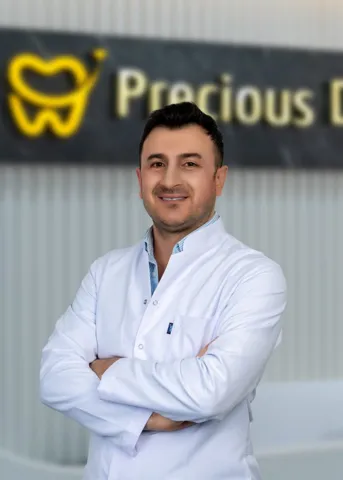 Medically reviewed by Dt. Hüseyin Yavuz Özbek, implant surgeon · Updated October 2026
Many Turkish dentists who treat UK patients speak English; others work through a coordinator or translator. Either can work. What matters is that you understand your diagnosis, the options, the risks and the plan before you agree, that you get them in writing in English, and that someone who speaks English can reach the dentist if you have a problem at home.
Clinics that advertise in the UK usually have staff who speak excellent English. Dentists vary. Some trained or worked abroad and are fluent. Others speak enough for the chair but prefer a translator for detailed explanations. Neither is a problem in itself. The risk is in not fully understanding what you have agreed to.
What you need to understand before treatment
- What is wrong, in plain terms.
- The options, including doing less or nothing.
- The risks of the treatment you choose.
- Exactly what will be done on each day.
- What it costs, and what is not included.
- What aftercare you need, and who provides it.
The NHS treatment abroad checklist encourages patients to make sure they understand the procedure and its risks before going ahead. That applies in any language.
Working through a translator
If the dentist speaks through a coordinator, keep sentences short and ask the coordinator to translate your questions word for word. Ask the dentist to explain anything important twice, in different words. Then ask for the key points in writing in English. A written plan protects both of you.
Consent forms
Ask for consent forms in English, and read them before the day of surgery if you can. If a form is only in Turkish, ask for a translation of what it says. Do not sign something you do not understand just because you are in the chair.
A signal in the chair
Agree a simple signal, such as raising your left hand, that means “stop and explain”. This is good practice anywhere, and particularly useful when language is a barrier.
After you get home
Problems after treatment are usually discussed by message. Ask who will answer if you have pain or a loose crown: the dentist, a coordinator, or both. Ask how quickly they normally reply. A clinic that is very responsive before you book but slow afterwards is a common complaint in reviews; see reading reviews.
Questions to ask about communication
- Does the dentist speak English, and will a translator be present for the consultation?
- Will I receive the treatment plan and consent forms in English?
- Who will I message after I get home, and in what language?
- How quickly do you usually reply to messages from patients abroad?
Bring a companion if you can
Treatment days are tiring, and it is easy to forget what was said, especially after anaesthetic. A companion can listen, take notes and ask the questions you forget. Many clinics welcome a companion in the consultation, and some in the treatment room.
Write it down
After each appointment, ask for a short written note of what was done and what happens next. Many clinics send this by message. Keep these notes with your treatment plan. If you need a UK dentist later, they will be invaluable; see finding a UK dentist after treatment.
Hearing and sight
If you have hearing loss or poor eyesight, tell the clinic in advance. Ask for important information in writing in a large font, and for explanations face to face rather than behind a mask where possible. A good clinic will adapt.
Cultural differences
Turkish clinics are often warm and hospitable, and staff may be reluctant to say no or to deliver bad news bluntly. If you want a straight answer, ask a direct question: “What are the risks for me?” or “Would you do this on your own mother?” Most dentists appreciate the clarity.
Words worth knowing
You do not need Turkish to have treatment in Türkiye, but recognising a few words on documents helps:
| Turkish | Meaning |
|---|---|
| Diş hekimi (Dt.) | Dentist |
| Uzman (Uzm.) | Specialist |
| Ağız ve Diş Sağlığı Polikliniği | Oral and dental health clinic |
| Tedavi planı | Treatment plan |
| Onam formu | Consent form |
| Garanti belgesi | Guarantee certificate |
| Fatura | Invoice |
What consent should cover
The NHS advice on going abroad for treatment encourages patients to understand what they are agreeing to. For dental surgery, a consent discussion should cover at least:
- What will be done, tooth by tooth.
- The main risks, such as infection, nerve injury, implant failure or sinus problems.
- The alternatives, including doing nothing.
- What anaesthesia or sedation will be used.
- What happens if the plan has to change during treatment.
If anything on the form is unclear, ask for it to be explained before the day of treatment, not in the chair.
Remote communication after you get home
Most aftercare from a Turkish clinic happens by message and photo. Make it easy:
- Take photos in daylight, close up, with your lips gently pulled back.
- Describe the problem simply: where, since when, how bad, getting better or worse.
- Mention any fever, swelling or difficulty swallowing straight away.
- Keep the clinic’s reply times in mind and do not wait if you are worried; see a UK dentist or call NHS 111.
Finding a dentist who communicates well
Reviews are useful here: patients often comment on how clearly things were explained, and on how the clinic responded after they went home. See reading reviews without being misled. A video call before booking is the best test of all.
Before the trip: setting expectations
A short message before you travel avoids misunderstandings: “I would like the dentist to explain each step to me before doing it. If a translator is needed, please make sure one is present for my consultation and on surgery days. Please send my treatment plan and consent forms in English before I arrive.” Most clinics will agree, and the request itself tells them you expect clear communication.
During treatment: what good communication looks like
- The dentist introduces themselves by name and explains what will happen that day.
- You are shown your X-ray or scan and the plan on a screen.
- You are asked whether you have questions before anything starts.
- You are told what you will feel, how long it will take and how to signal if you need a break.
- At the end, you get written aftercare instructions in English.
When something is not clear
If you do not understand, say so, and ask for it to be explained differently or drawn on paper. If you are being asked to agree to a change in the plan in the chair, for example an extra implant or a graft, ask for a moment to think and for the reason and cost in writing. You are entitled to understand a change before agreeing to it.
Communication with your UK dentist
Ask whether your Turkish dentist is willing to write a short summary in English for your UK dentist: what was done, which materials and implant system, and anything to watch for. Some clinics provide this as standard. It makes your first UK check-up far more useful. See finding a UK dentist after treatment.
Dentists who publish English CVs
Several dentists in this guide publish CVs in English, such as Dt. Eda Çeşit and Dt. Hazal Cankurt Aras at My Nova in Izmir. An English CV is not proof of spoken English, but it is a helpful sign that the clinic expects international patients to read about its team.
Your next steps
Ask for your plan and consent forms in English before you travel, and agree who you will message after you get home.
Our approach
Precious Dental, which publishes this guide, treats many UK patients, and our coordinators reply in English. If you would like to speak to our top pick, Dt. Hüseyin Yavuz Özbek, ask for a video call before you book. You can check his record on his profile.
Common questions
Is it safe to be treated through a translator?
It can be, if the translator is competent and you get the key information in writing too.
Will I get a consent form in English?
Ask for one. You should understand everything you sign.
What if I don’t understand something during treatment?
Agree a simple signal before you start, such as raising a hand, so the dentist stops and explains.
Can I bring someone with me?
Usually yes. A companion can help you remember what was said.
Sources
- NHS: treatment abroad checklist
- GOV.UK: Turkey travel advice, health
- NHS: going abroad for medical treatment
Checked October 2026. Where we give our own view as a clinic, we say so.
Want our top pick to look at your case?
Send an X-ray or a few photos to Precious Dental in Antalya. Dt. Hüseyin Yavuz Özbek, our implant surgeon, or one of his colleagues will reply with a written plan and price. No obligation, and you are free to compare it with any dentist in this guide.