Gum disease? Why a periodontist may need to see you first
Bleeding gums and loose teeth are not just a cosmetic problem. They change what treatment is safe.
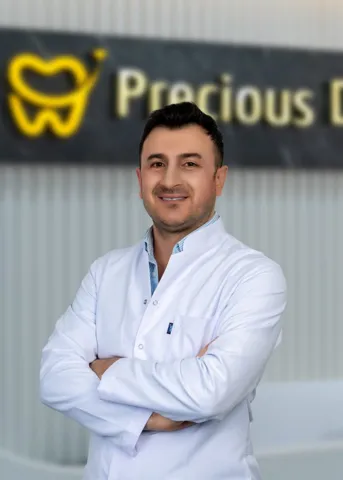 Medically reviewed by Dt. Hüseyin Yavuz Özbek, implant surgeon · Updated October 2026
Gum disease (periodontitis) destroys the bone that holds teeth and implants. Implants placed in a mouth with active gum disease are more likely to develop inflammation and bone loss around them. If you have bleeding gums, loose teeth or bone loss on your X-ray, your gums should be assessed and treated, ideally by a periodontist, before implants, crowns or veneers.
Many UK patients who travel for implants have lost teeth to gum disease. That is not a reason to avoid implants. It is a reason to make sure the gum disease is under control before anyone places them, and to know who will keep an eye on it afterwards.
What gum disease does
Gum disease starts as inflammation of the gums, which often bleed when you brush. If it progresses, it destroys the bone and ligament that hold teeth in place. Teeth loosen, drift and are eventually lost. The NHS describes the early signs as red, swollen gums that bleed when you brush, and later signs as bad breath, loose teeth and gum abscesses.
Implants can suffer a similar process. Inflammation around an implant, with bone loss, is one of the main reasons implants fail after the first year. A history of gum disease makes this more likely, especially if the disease is still active when implants go in.
Who should look at your gums
A periodontist (periodontoloji uzmanı) is the specialist for gums and the bone around teeth and implants. Many Turkish periodontists also place implants, so the same person can treat your gums and plan your implants. Several of the dentists in this guide are periodontists, including two professors of periodontology in Izmir. See our periodontists page.
Signs your gums need attention before treatment
- Your gums bleed when you brush or floss.
- Some teeth have become loose or have moved.
- Your UK dentist or hygienist has mentioned “pockets” or bone loss.
- You smoke, or have diabetes that is not well controlled.
- You have lost teeth without decay or injury.
What treatment before implants can look like
For many people it starts with a thorough deep clean below the gum line, advice on cleaning at home and a check of the results. Some need gum surgery. Some teeth may be too far gone to save. A good plan says which teeth are being kept and why, which are being removed, and when implants can safely go in.
Ask whether this can be done in your first trip, or whether part of it should be done by your UK dentist or hygienist before you travel. Sometimes the second option is better, because gum treatment takes time to show its results.
After implants: the part that is up to you
Gum disease is a long-term condition. After implants or bridges, you will need daily cleaning, including under any bridge, and regular professional cleaning at home. Ask your Turkish dentist to give you written instructions and to tell you what your UK hygienist should look out for. See finding a UK dentist after treatment.
Smoking, diabetes and gums
Smoking and poorly controlled diabetes both make gum disease worse and slow healing after surgery. If either applies to you, your dentist should discuss it frankly before planning implants. Stopping smoking, even for a few weeks around surgery, helps. Good diabetes control before and after treatment helps too. Your GP can advise.
Keeping implants healthy for years
Implants do not decay, but the gum and bone around them can become inflamed in the same way as around teeth. Signs include bleeding when you clean, swelling, a bad taste or the gum shrinking back to show metal. If you notice any of these, see a dentist promptly. Caught early, it is often treatable; left alone, it can lead to the implant being lost.
What good maintenance looks like
- Cleaning twice a day, including between teeth and under any bridge.
- Interdental brushes or a water flosser, as your dentist advises.
- Professional cleaning and checks at intervals set by your dentist, often every three to six months at first.
- X-rays from time to time to check the bone level.
Periodontists we have checked
In Izmir, Prof. Dr. Nejat Nizam and Prof. Dr. Şükrü Kandemir are periodontists at Nifa Dent, alongside specialist Rouzbeh Fazeli, who lists implant work in complex cases. In Istanbul and Izmir we also list periodontology specialists at Dentistanbul and My Nova. All are on the periodontists page, with links to their records.
Gum treatment on the NHS
The NHS explains that scaling and cleaning is usually included in Band 1 when clinically necessary, and that more extensive treatment for complex gum problems may be charged as Band 2. If you have gum disease, it can be worth starting treatment with your UK dentist or hygienist before you travel. That gives your gums time to settle, and your Turkish dentist a healthier starting point.
Cleaning your teeth properly
The NHS advice on keeping teeth clean recommends brushing twice a day with fluoride toothpaste for about two minutes and cleaning between your teeth with floss or interdental brushes. For gum disease, the cleaning between teeth is often what makes the biggest difference. Ask your hygienist which size of interdental brush fits each gap.
A before-and-after plan for patients with gum disease
- Before travel: UK examination and cleaning; X-rays; start better cleaning at home.
- Assessment in Türkiye: 3D scan; periodontal assessment; decision on which teeth to keep.
- Treatment: gum treatment first, implants when the gums are healthy enough.
- Between trips: careful cleaning; report bleeding or swelling.
- After final teeth: regular hygienist visits in the UK for life.
Questions for a periodontist
- How much bone have I lost, and around which teeth?
- Can any of my teeth be kept long term?
- Do I need treatment before implants, and how long before?
- Will you place the implants yourself?
- What signs of trouble around implants should I look out for?
A worked example: saving teeth or replacing them
A patient with gum disease is offered a full upper bridge on implants. A periodontist examines them and finds that the front teeth have lost a lot of bone but the back teeth are reasonably firm. One option is to remove all teeth and place a full-arch bridge. Another is to treat the gums, keep the back teeth for now and replace only the front teeth. Both are defensible. The periodontist’s job is to explain the likely future of the teeth that stay, so the patient can choose with their eyes open.
Smoking and implants
Smoking is one of the strongest risk factors for gum disease and for problems around implants. If you smoke, tell the dentist, and ask what difference stopping would make. Your GP or a local stop-smoking service can help you quit.
Your next steps
- Ask your UK dentist whether you have active gum disease.
- If you do, start treatment and better cleaning at home before you travel.
- Ask your Turkish dentist how your gums affect the plan.
- Consider a periodontist’s opinion if teeth are loose or bone loss is advanced.
- Plan for regular hygienist visits after treatment.
Healthy gums are the foundation for everything else, so dealing with them first is rarely wasted time.
Questions for your dentist
- Do I have active gum disease now?
- Will it be treated before implants, and by whom?
- Which teeth can be saved, and which not?
- What do I need to do at home, every day, to protect the implants?
- How often should I see a hygienist afterwards?
For the full picture of who does what, see our titles and specialities guide.
Common questions
What is a periodontist?
A dentist who specialises in the gums and the bone around teeth and implants. In Turkish: periodontoloji uzmanı.
Can gum disease be treated in one trip to Turkey?
Initial deep cleaning often can. But gum disease is long-term; you will need regular care at home in the UK afterwards.
Do I still get implants if I had gum disease?
Often yes, once it is under control, but you need good cleaning and regular check-ups for life.
Do Turkish periodontists place implants?
Many do. Check their branch on HealthTürkiye and their published field of work.
Sources
- NHS: gum disease
- HealthTürkiye: health professionals
- NHS: understanding NHS dental charges
- NHS: how to keep your teeth clean
Checked October 2026. Where we give our own view as a clinic, we say so.
Want our top pick to look at your case?
Send an X-ray or a few photos to Precious Dental in Antalya. Dt. Hüseyin Yavuz Özbek, our implant surgeon, or one of his colleagues will reply with a written plan and price. No obligation, and you are free to compare it with any dentist in this guide.