A professor, or a busy practising dentist?
Prof. Dr. sounds reassuring. Sometimes it is exactly what you need. Sometimes a dentist who does your treatment every day is the better choice.
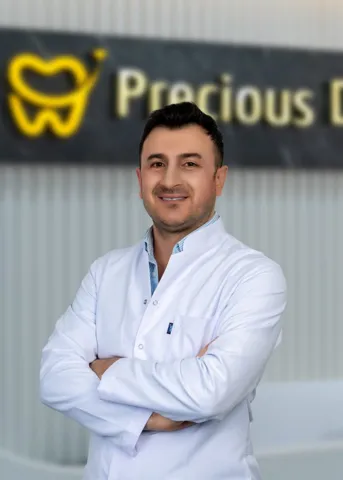 Medically reviewed by Dt. Hüseyin Yavuz Özbek, implant surgeon · Updated October 2026
A professor (Prof. Dr.) or associate professor (Doç. Dr.) has reached a senior university rank through research and teaching, and is often the right choice for complex or unusual cases. For routine treatment, an experienced practising dentist who does that procedure every week can be just as good. Ask any dentist how often they do your treatment, who will actually carry it out, and whether they will see you on the second trip.
Several dentists in this guide hold university ranks. In Izmir, Prof. Dr. Nejat Nizam and Prof. Dr. Şükrü Kandemir are periodontists at Nifa Dent; in Fethiye, Assoc. Prof. Dr. Zeynep Çukurova Yılmaz is an oral and maxillofacial surgeon at Dentoper. Their records and CVs show long academic careers. For the right patient, that experience is invaluable.
But a title is not a treatment plan. Here is how to think about the choice.
What the academic ranks mean
- Dr. Öğr. Üyesi (doctor lecturer): a university lecturer with a doctorate, similar to an assistant professor.
- Doç. Dr. (doçent): associate professor, a rank earned after a doctorate through published research and a formal academic assessment.
- Prof. Dr.: professor, the highest university rank.
These ranks tell you a dentist has spent years teaching, researching and often treating difficult cases in a university hospital. They do not tell you how much of their current working week is spent with patients like you.
When academic experience is worth seeking out
- Complex or unusual cases: very little bone, a history of failed implants, severe gum disease, jaw-joint problems.
- When other dentists disagree: a senior opinion can settle whether teeth can be saved.
- When you need a specialist who teaches that speciality: for example a professor of periodontology for advanced gum disease.
When a practising dentist may be the better fit
For a straightforward case, such as a set of crowns, a few implants in good bone or veneers, what matters most is that the dentist does that treatment often, plans it carefully and puts everything in writing. A practising dentist who places implants every week may have more recent hands-on experience with your procedure than a professor whose time is split with teaching.
Our top pick, Dt. Hüseyin Yavuz Özbek of Precious Dental, is in this category: a general dentist whose work is focused on implant surgery and prosthetics. Precious Dental publishes this guide, so you should weigh our view accordingly, and check the facts on his profile.
Questions that cut through titles
- How many times have you done this exact treatment in the past year?
- Will you personally do each stage, or will colleagues do parts of it?
- Will you be there on my second trip?
- What would make you change the plan once you have seen me?
- Who do I contact, and how quickly, if I have a problem at home?
A senior academic who answers these well is an excellent choice. So is a practising dentist who answers them well. A title on its own is not.
Watch for borrowed authority
Some clinics advertise a professor as “consultant” or “head of our team” when that person rarely sees international patients. If a professor’s name is on the website but not on your treatment plan, ask whether they will be involved in your care at all.
How academic dentists split their time
Senior university dentists in Türkiye often divide their week between teaching, research, a university clinic and, sometimes, private practice. Some work in private clinics only on certain days. That can be ideal: you get a senior opinion without an academic waiting list. But it can also mean that the professor plans your case and a colleague carries out much of it. Ask how the work will be divided.
Retired professors in private practice
Some highly experienced dentists move into private practice after a long university career. Their experience can be exceptional. As with anyone, ask how much of your treatment they will do themselves and how they keep up with newer techniques.
A balanced way to decide
- Decide how complex your case is. If two dentists have given different opinions, or you have unusual medical factors, a senior academic opinion is worth more.
- List the dentists you are considering and look each up on HealthTürkiye.
- Ask each the same questions about experience, who does what and aftercare.
- Choose the one whose answers you trust, not the one with the longest title.
Academic dentists in this guide
| Dentist | Title on the register | Branch | Clinic |
|---|---|---|---|
| Şükrü Kandemir | Professor | Periodontology | Nifa Dent, Izmir |
| Nejat Nizam | Professor | Periodontology | Nifa Dent, Izmir |
| Zeynep Çukurova Yılmaz | Associate Professor | Oral, Dental and Maxillofacial Surgery | Dentoper, Fethiye |
Each profile links to the register entry and the clinic’s published CV.
Experienced practising dentists in this guide
Several dentists without academic ranks have long careers on the register. Dt. Mehmet Çolak in Bodrum graduated from Ege University in 1987; Dt. Uğur Erçiftçi in Izmir in 1990; Dt. Ömer Murat Saraç in Kuşadası in 1997. Long experience in general practice is a different kind of expertise from an academic career, and for many routine treatments it is exactly what you want.
The UK comparison
In the UK, the GDC keeps lists of specialists in recognised dental specialities, and many experienced general dentists also carry out complex work after further training. The same pattern holds in Türkiye: titles show formal training, but experience and focus also count. The GDC’s patient pages explain what UK registration means.
A question that helps
Ask any senior dentist: “If you were treating your own family member with my problem, who would you want to do it?” Many will answer honestly, and sometimes the answer is a colleague rather than themselves. That is a sign of a dentist putting your result first.
Signs that a senior dentist will be involved in your care
- Your treatment plan names them, not just the clinic.
- They are available for a video call before you book.
- They tell you which stages they will do personally.
- The clinic confirms their working days match your appointments.
If a professor is named on the website but none of these apply, you are probably being treated by someone else. That may still be fine, but you should know who.
Weighing cost against seniority
Some clinics charge more for treatment by senior dentists; others do not. If you are offered a choice, ask what the difference would be for your case. For a straightforward case, paying extra for a title may not change the result. For a complex one, it may be worth it. Ask the senior dentist directly whether they think your case needs them.
Where to find both
Our periodontists and oral surgeons pages include academic dentists; our A to Z list includes experienced practising dentists across the country.
Your next steps
- Decide whether your case is straightforward or complex; a UK dentist can help.
- If complex, shortlist a specialist or academic dentist from our speciality pages.
- If straightforward, include experienced practising dentists too.
- Ask every candidate the same questions about experience and who does what.
- Choose on the answers, not the title.
Whichever you choose, the same rule applies: get the name of the person who will treat you, check them, and make sure they will be there when your final teeth are fitted. A title is a reason to look closer, not a reason to stop looking.
How our ranking treats titles
In our national ranking, the register title is used only to break ties between dentists who pass the same number of public checks. We explain why in how we rank. If you want a senior academic, look at the periodontists and oral surgeons pages, where several are listed.
Common questions
What does Doç. Dr. mean?
Doçent doktor, associate professor. It is a university rank gained after a doctorate, published research and an academic assessment.
Do professors still treat patients?
Many do, in university clinics and private practice. Ask how much of their week is spent treating patients.
Will a professor do my whole treatment?
Not always. In some clinics a senior dentist plans and supervises while others carry out parts of the work. Ask who does what.
Is a professor more expensive?
Often, but not always. Ask whether the quote depends on which dentist treats you.
Sources
- HealthTürkiye: health professionals
- NHS: treatment abroad checklist
- General Dental Council: information for patients
Checked October 2026. Where we give our own view as a clinic, we say so.
Want our top pick to look at your case?
Send an X-ray or a few photos to Precious Dental in Antalya. Dt. Hüseyin Yavuz Özbek, our implant surgeon, or one of his colleagues will reply with a written plan and price. No obligation, and you are free to compare it with any dentist in this guide.