Who should do your veneers in Türkiye?
The difference between good veneers and “Turkey teeth” is mostly about how much tooth the dentist removes. That depends on the dentist.
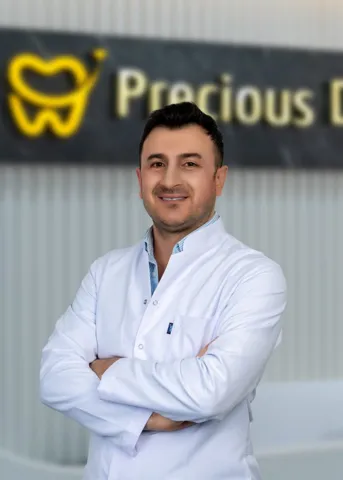 Medically reviewed by Dt. Hüseyin Yavuz Özbek, implant surgeon · Updated October 2026
Veneers in Türkiye are done by general dentists, restorative dentists (Restoratif Diş Tedavisi) and prosthodontists. Look for a dentist who does veneers regularly, explains the difference between veneers and crowns, shows you a mock-up before touching your teeth, and tells you in writing how much tooth will be removed. A specialist title is helpful but less important than conservative technique.
Many UK patients go to Türkiye for veneers. Many come back happy. Some come back with what the press calls “Turkey teeth”: very white, very square teeth that are often not veneers at all but full crowns, with most of the natural tooth filed away. The difference usually comes down to the dentist’s approach.
Three kinds of dentist who do veneers
Restorative dentists
Restorative dentistry (Restoratif Diş Tedavisi) is a Turkish speciality covering fillings, composite bonding and veneers, with a focus on keeping natural tooth. A restorative approach is a good fit for patients who want to change colour or shape without heavy preparation.
Prosthodontists
Prosthodontists specialise in replacing and covering teeth. They are a strong choice when many teeth are involved, when your bite needs changing or when some teeth need crowns and others veneers. See do you need a prosthodontist.
General dentists
Many excellent veneer dentists are general dentists who have done further training and do veneers every week. Experience and technique matter more than the title.
The questions that protect your teeth
- Are these veneers or crowns? Ask for it in writing.
- How much tooth will you remove, roughly, in millimetres?
- Will I see a mock-up in my mouth before you prepare anything?
- Porcelain or composite, and why for me?
- Which laboratory makes them?
- What is the guarantee, and what does it not cover?
A dentist who answers these clearly and is happy to put them in writing is a good sign.
Warning signs
- A plan for 20 “veneers” on healthy teeth, agreed from photos alone.
- No mention of a mock-up or trial.
- Vague answers about how much tooth is removed.
- Pressure to decide quickly or a big discount for paying today.
Whitening first
Veneers and crowns do not change colour with whitening, so dentists often suggest whitening your natural teeth first and matching the new work to the result. See our whitening page.
Porcelain or composite?
Porcelain veneers are made in a laboratory and bonded to the teeth. They resist staining, keep their shine and can last many years, but they usually need a thin layer of enamel removed and are hard to repair. Composite veneers are built up directly on the teeth by the dentist. They often need little or no tooth removed and can be repaired or polished, but they stain and wear faster and need more maintenance. Ask which suits you.
What happens to the teeth underneath
Veneers bonded to enamel generally hold well and leave the tooth healthy underneath. Crowns, which cover the whole tooth, need much more tooth removed and can leave it more vulnerable to sensitivity or nerve problems. That is why the veneers-or-crowns question matters so much. If you are told your teeth are too small, crooked or dark for veneers, ask whether orthodontics, whitening or bonding could help first.
Looking after veneers
- Brush and clean between teeth as normal.
- Avoid biting very hard things, such as ice or bottle tops, with front teeth.
- Wear a night guard if you grind.
- See a UK dentist regularly, and take your veneer details with you.
A checklist for your veneer consultation
| Ask | Why it matters |
|---|---|
| Which teeth, exactly? | Only teeth that show when you smile usually need cosmetic work. |
| Veneer or crown, per tooth? | Crowns remove far more tooth. |
| How much enamel is removed? | Bonding to enamel tends to last better than bonding to the softer layer beneath. |
| Mock-up first? | You see the shape before anything is irreversible. |
| Material and laboratory? | Affects appearance, strength and repairability. |
| Shade? | A very white shade can look unnatural, especially with age. |
| Guarantee terms? | What is covered, for how long, and where it can be used. |
Grinding and veneers
If you grind or clench your teeth, veneers are more likely to chip or come off. The NHS notes that a dentist may recommend a mouth guard or splint worn at night to protect teeth from grinding damage. Tell your Turkish dentist if you grind, and ask whether a night guard is included. If your partner has ever mentioned noise at night, or you wake with a sore jaw, mention that too.
Whitening before veneers
Whitening only changes the colour of natural teeth. If some of your teeth will not be veneered, whitening them first lets the veneers be matched to the brighter shade. Whitening should be carried out or supervised by a dental professional; the NHS page on teeth whitening explains the options and their limits.
Dentists who list restorative or aesthetic work
In Fethiye, Dt. Gürkan Bal and Dt. Betül Kaya Kölemen are registered in the Restorative Dentistry branch and list aesthetic work; Betül Kaya Kölemen’s profile lists courses including all-ceramic restorations. In Izmir, Dr. Şükrü Mert Yüce, a PhD prosthodontist, lists cosmetic dentistry. See all of them on our restorative dentists page.
Veneers on older teeth
Older patients often have worn edges, old fillings and gum recession. Veneers can still work well, but the plan may need to deal with worn teeth or gums first, and a slightly less bright shade usually looks more natural. A careful dentist will discuss this rather than offering the same package to everyone.
A worked example: two plans for the same smile
Imagine a patient in their fifties with slightly crooked, stained upper front teeth and some old fillings. Two clinics reply:
- Plan A: 20 zirconia crowns, upper and lower, one week, one price.
- Plan B: whitening of all teeth, eight porcelain veneers on the upper front teeth after a mock-up, two crowns on heavily filled back teeth, and composite bonding on two lower teeth.
Plan A is simpler to sell and quicker to deliver. Plan B treats fewer teeth, keeps more natural enamel and matches the treatment to each tooth’s condition. Plan B may cost more per tooth, and may not suit everyone, but it is the kind of plan a conservative restorative dentist or prosthodontist would usually propose first. If you receive something like Plan A, ask why each healthy tooth needs a crown.
What to ask about the laboratory
The technician who makes your veneers matters almost as much as the dentist who fits them. Ask whether the laboratory is in the clinic or outside, whether the technician sees your photos or mock-up, and whether the veneers are hand-layered or milled in one block. In-house laboratories can make quick adjustments during your stay; that is useful when time is short.
What “guarantee” means for veneers
Read the guarantee carefully. Common questions:
- Does it cover a veneer that comes off, chips or cracks?
- Is it void if you grind your teeth without a night guard?
- Do you need to return to the clinic to use it, and who pays for travel?
- Does it require regular check-ups, and do UK check-ups count?
Precious Dental, which publishes this guide, publishes its guarantee periods on its website, including for laminate veneers. Ask every clinic for theirs in writing.
Your next steps
- Ask for a tooth-by-tooth plan and a mock-up.
- Check the guarantee terms in writing.
Veneer dentists we have checked
Our veneer dentists page lists dentists with restorative, prosthetic or aesthetic work in their published field. Our top pick, Dt. Hüseyin Yavuz Özbek, is an implant dentist; his clinic, Precious Dental, publishes a written guarantee for laminate veneers. Precious Dental publishes this guide. For more on veneers themselves, see turkeyveneers.co.uk.
Common questions
What is the difference between veneers and crowns?
Veneers cover the front of the tooth; crowns cover the whole tooth and usually need much more tooth removed.
How much tooth is removed for veneers?
Often well under a millimetre on the front surface for porcelain veneers, sometimes none for some composite work. Ask for the figure.
Can I see what my veneers will look like?
Ask for a mock-up: a temporary model of the new shape placed over your own teeth.
Are composite veneers a good idea?
They need little or no tooth removal and can be repaired, but they stain and wear faster than porcelain.
Sources
- Oral Health Foundation: going abroad for dental treatment
- HealthTürkiye: health professionals
- NHS: teeth grinding
- NHS: teeth whitening
Checked October 2026. Where we give our own view as a clinic, we say so.
Want our top pick to look at your case?
Send an X-ray or a few photos to Precious Dental in Antalya. Dt. Hüseyin Yavuz Özbek, our implant surgeon, or one of his colleagues will reply with a written plan and price. No obligation, and you are free to compare it with any dentist in this guide.