When you need an oral surgeon in Türkiye
Most implants do not need a specialist surgeon. Some definitely do. Here is how to tell.
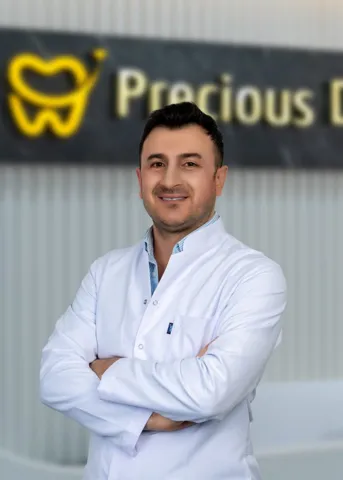 Medically reviewed by Dt. Hüseyin Yavuz Özbek, implant surgeon · Updated October 2026
An oral and maxillofacial surgeon (Ağız, Diş ve Çene Cerrahisi uzmanı) is worth seeking out if you need a bone graft, a sinus lift, implants in very thin or soft bone, removal of impacted teeth, or treatment for jaw problems. Ask whether a surgeon will do these parts, what anaesthesia or sedation is used, and how long to wait before flying home.
Oral and maxillofacial surgery (Ağız, Diş ve Çene Cerrahisi) is the surgical speciality of dentistry. Oral surgeons in Türkiye train for several years after their dental degree, usually at a university hospital, and many hold doctorates. In implant treatment they are the people you want for the difficult parts.
When a surgeon is worth asking for
- A sinus lift. In the upper back jaw, the sinus often sits close to where an implant needs to go. Adding bone under the sinus floor is delicate surgery.
- A bone graft. If you have lost bone, it may need rebuilding before or during implant placement.
- Very thin or soft bone, or implants placed at unusual angles, as in some full-arch techniques.
- Impacted or difficult teeth, such as buried wisdom teeth.
- Jaw-joint problems and some jaw surgery.
- Medical complications, such as bone medicines or a history of radiotherapy to the jaw.
When you probably do not need one
If your scan shows enough healthy bone and you need a few standard implants, an experienced general dentist or periodontist may be entirely suitable. Our top pick, Dt. Hüseyin Yavuz Özbek of Precious Dental, is a general dentist focused on implant surgery and prosthetics; Precious Dental publishes this guide.
Questions to ask about the surgery
- Will I need a graft or sinus lift? How do you know: from my X-ray or from a 3D scan?
- Who will do it, and what is their title and branch on the register?
- Is the graft material from me, from a donor, animal-derived or synthetic?
- Will the implants go in on the same day, or after the graft heals? Does that add a trip?
- What anaesthesia or sedation will you use, and who gives it?
- How many days before I can fly?
- What should I do if I have swelling, bleeding or fever after I get home?
Flying after surgery
Flying soon after surgery in the upper jaw, especially a sinus lift, can be uncomfortable or affect healing. Build rest days into your trip, and follow your surgeon’s advice on when to fly. Our city guide covers how far each city’s airport is from its clinics.
Bone grafts explained simply
When a tooth is lost, the bone that held it slowly shrinks. After some years there may not be enough width or height for an implant. A bone graft adds material to rebuild it. Grafts can be small, done at the same time as the implant, or large, needing months to heal before implants go in. The material may come from your own body, from a donor, from an animal source or be synthetic. Ask which and why, especially if you have dietary or religious preferences.
Sinus lifts explained simply
The upper back teeth sit under the maxillary sinus, an air space in the cheekbone. After teeth are lost, the sinus often expands downwards, leaving little bone. A sinus lift gently raises the sinus lining and adds bone beneath it. It can be done through the implant hole (a smaller procedure) or through a window in the side of the jaw (a larger one). The surgeon should tell you which you need.
Alternatives to grafting
Some full-arch techniques tilt the back implants to avoid the sinus, or use shorter implants, to avoid grafting. Others use special long implants anchored in the cheekbone, which are complex surgery for specialists. Ask whether there is an alternative to grafting in your case, and what the trade-offs are.
After surgery
- Expect some swelling and bruising for a few days.
- Follow instructions on painkillers and antibiotics exactly.
- Avoid blowing your nose hard after a sinus lift.
- Eat soft, cool food and avoid smoking.
- Keep the clinic’s emergency contact number with you.
Surgeons we have checked
- Assoc. Prof. Dr. Zeynep Çukurova Yılmaz, Dentoper Fethiye: Yeditepe University (2011), doctorate in oral and maxillofacial surgery at Yeditepe; published CV.
- Dr. Dt. Mehmet Cem Özden, Swissdent Bodrum: İstanbul University (2011), doctorate in oral, dental and maxillofacial surgery at the same university.
- Dr. Furkan Parlak, Dentistanbul: listed on the register as a specialist in oral, dental and maxillofacial surgery.
- Dt. Hazal Cankurt Aras, My Nova Izmir: register branch Oral, Dental and Maxillofacial Surgery, with an English CV linked from the clinic website.
Wisdom teeth and other extractions
The NHS explains that wisdom teeth can be removed on the NHS when clinically necessary, and that a dentist may refer you to a specialist. Many UK patients do not need to travel for this. But if difficult extractions are part of a larger implant plan in Türkiye, ask whether a surgeon will do them, and whether implants will be placed at the same time or later.
Anaesthesia and sedation
Most implant surgery is done under local anaesthetic, sometimes with sedation for comfort. General anaesthetic is used less often and usually in a hospital setting. The NHS overview of anaesthesia describes the difference between local, sedation and general anaesthesia. Ask which is planned for you, who gives it and what monitoring is used. See also our sedation page.
Risks to discuss
A good surgeon will talk through the risks relevant to your case before surgery. Depending on what is planned, these can include bleeding, infection, swelling, numbness from nerve irritation in the lower jaw, sinus problems after upper-jaw surgery and a graft or implant that does not heal. Ask how likely each is for you and what would be done about it. A surgeon who says there are no risks is not being straight with you.
A worked example: deciding whether you need a surgeon
A patient sends a panoramic X-ray showing missing upper back teeth. The first clinic says “simple implants, two days”. The second says “we need a 3D scan; the sinus may be too low, and you might need a sinus lift.” The second answer is not necessarily more expensive or worse; it is more cautious. A 3D scan will show which is right. If a sinus lift is needed, ask whether a surgeon will do it and whether it adds a trip.
Recovery days to plan
- The day of surgery: rest, cold compresses, soft cool food.
- The next two to three days: swelling often peaks, then settles.
- Before flying: a check at the clinic, especially after a sinus lift.
- At home: follow instructions on stitches, mouthwash and medicines.
Your surgeon’s instructions come first. If something does not feel right, contact the clinic and, if needed, a UK dentist or NHS 111.
Your next steps
- Ask whether your plan is based on a 3D scan, and if not, expect it may change.
- If a graft or sinus lift is likely, ask who will do it and look them up on HealthTürkiye.
- Ask what anaesthesia or sedation is planned and who gives it.
- Build rest days into your trip before flying.
- Leave with written aftercare instructions and an emergency contact.
Our oral surgeons page lists the surgeons we have checked.
Surgery is the part of treatment where caution pays most, so take the time to check who will do it.
Surgeons we have checked
Our oral surgeons page lists named surgeons in Istanbul, Izmir, Bodrum and Fethiye, including an associate professor of oral surgery, with their register entries and CV sources.
Common questions
What is a sinus lift?
A procedure that adds bone under the sinus floor in the upper back jaw, so implants have enough bone to hold them.
How long after a sinus lift can I fly?
Ask your surgeon. Many advise waiting several days, because pressure changes can affect healing.
Is a bone graft done on the same day as implants?
Sometimes. Other times the graft needs months to heal before implants are placed, which can add a trip.
Can a general dentist do bone grafts?
Some do small grafts after training. For larger grafts or sinus lifts, a surgeon’s involvement is a good sign.
Sources
- HealthTürkiye: health professionals
- NHS: treatment abroad checklist
- NHS: wisdom tooth removal
- NHS: anaesthesia
Checked October 2026. Where we give our own view as a clinic, we say so.
Want our top pick to look at your case?
Send an X-ray or a few photos to Precious Dental in Antalya. Dt. Hüseyin Yavuz Özbek, our implant surgeon, or one of his colleagues will reply with a written plan and price. No obligation, and you are free to compare it with any dentist in this guide.