Who places dental implants in Türkiye?
Clinics talk about their “implantologist”. Türkiye has no such official title. Here is who really does the surgery.
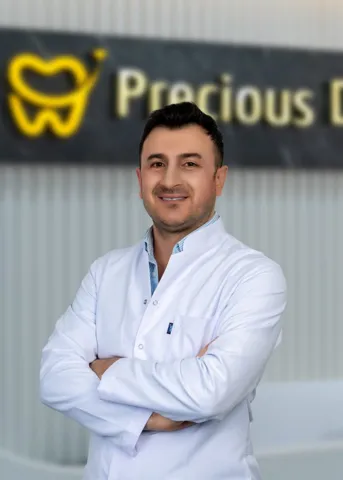 Medically reviewed by Dt. Hüseyin Yavuz Özbek, implant surgeon · Updated October 2026
In Türkiye, implants are placed by oral and maxillofacial surgeons, periodontists, some prosthodontists, and general dentists who have done further implant training. “Implantologist” is a description, not a recognised speciality. Ask the dentist’s register title, how many implants they place each month, and who will make the teeth that go on top.
Almost every Turkish clinic that treats UK patients offers implants. Many describe one or more dentists as an “implantologist” or “implant specialist”. That sounds like a formal qualification. In Türkiye it is not. Implantology is not one of the country’s eight recognised dental specialities, so there is no official title for it.
That does not mean the dentists are unqualified. It means you need to look a little further to understand who is doing your surgery.
The four kinds of dentist who place implants
| Dentist | Turkish title and branch | Typical implant work |
|---|---|---|
| Oral and maxillofacial surgeon | Uzm. Dt., Ağız, Diş ve Çene Cerrahisi | Difficult extractions, bone grafts, sinus lifts, implants in thin or soft bone. |
| Periodontist | Uzm. Dt., Periodontoloji | Implants in patients with gum disease or bone loss; soft-tissue surgery around implants. |
| Prosthodontist | Uzm. Dt., Protetik Diş Tedavisi | Plans and makes implant teeth; some also place implants. |
| General dentist with implant training | Dt., Oral and Dental Health | Many routine implant cases, after further courses and supervised practice. |
Why general dentists place so many implants
In Türkiye, as in the UK, a large share of implants are placed by general dentists who have trained further. Specialist places are limited, and implant surgery for a healthy jaw with enough bone is a well-established procedure. A general dentist who has done good training and places implants regularly can build a great deal of experience.
Our top pick, Dt. Hüseyin Yavuz Özbek of Precious Dental, is one such dentist: his register title is Dentist, and his published field of work is implant surgery and prosthetics. Precious Dental publishes this guide.
When you should look for a specialist
- Your X-ray or scan shows you have lost a lot of bone.
- You have been told you need a bone graft or sinus lift.
- You have active gum disease, or have lost teeth to it.
- You have had implants fail before.
- You have a medical condition or take medicines that affect healing, such as some bone medicines.
In these situations ask whether a surgeon or periodontist will be involved. Our oral surgeons and periodontists pages list named specialists we have checked.
Surgery is only half of it
An implant is a post in the bone. What you see, chew with and clean every day is the crown or bridge on top. That part is designed by a dentist with prosthetic skills and made by a technician. A beautifully placed implant with a poorly designed bridge on top can still give you problems. We explain this in why your implants may involve two dentists.
Questions to ask about the person placing your implants
- What is your title and branch on the HealthTürkiye register?
- What implant training have you done, where and when?
- Roughly how many implants do you place in a month?
- Which implant brands do you use, and why this one for me?
- If my bone is thinner than expected on the day, what will you do?
- Who will check the implants on my second trip?
A note on “implant brands”
Ask for the brand and system in writing. Well-known systems are easier for a UK dentist to service later, because parts and tools are available. Our sister site allon6implant.co.uk explains what to ask about implant systems for full-arch treatment.
Implant training for general dentists
General dentists in Türkiye learn implant surgery through postgraduate courses run by universities, professional societies and implant manufacturers, and through supervised practice. The quality and length of these courses vary a lot. Some are weekend introductions; others are long programmes with hands-on surgery on patients. When a dentist lists implant training, ask what it involved and when, and what they have done since.
One dentist or a team
In some clinics, one dentist places the implant and fits the crown. In others, the work is split. Both can work well. What matters is that you know who is doing what and who is responsible overall. Our article on two dentists for one implant plan explains the trade-offs.
Signs of a careful implant dentist
- Insists on a 3D scan before placing implants.
- Asks detailed questions about your health and medicines.
- Explains the risks, including implant failure, without being asked.
- Tells you the implant system in writing.
- Gives you clear aftercare instructions and a way to reach them.
Implants in the UK, for comparison
In the UK, implants are usually private treatment. The NHS dental charge bands list crowns, bridges and dentures under Band 3; implants are not among the standard band treatments. The NHS page on dentures mentions implants as one alternative for replacing missing teeth. UK implant dentists are a mix of specialists and general dentists with further training, which is similar to Türkiye.
Dentists in this guide who list implant work
- Dt. Hüseyin Yavuz Özbek, Precious Dental, Antalya: implant surgery and prosthetics (our top pick; Precious Dental publishes this guide).
- Uzm. Dt. Rouzbeh Fazeli, Nifa Dent, Izmir: periodontology specialist listing implants in complex cases, sinus lifts and full-arch treatment.
- Dt. Osman Akan, Dentasey, Izmir: implantology training listed on his clinic profile.
- Dt. Erisa Olkun, My Nova Kuşadası: lists implant placement and implant-supported prosthetics.
See the full list on our implant dentists page.
What to do with the information
Once you know who will place your implants, check them on the register, ask the experience questions in how many implants has your dentist placed, and make sure you know who will make the teeth.
A worked example: matching the dentist to the case
Consider three patients. The first is missing one lower back tooth and has healthy bone on the scan: an experienced general dentist who places implants regularly is a sensible choice. The second has lost several upper back teeth years ago and the scan shows the sinus has dropped: an oral surgeon or periodontist with sinus-lift experience is worth asking for. The third has advanced gum disease and wants a full-arch bridge: a periodontist’s assessment of the gums, a surgeon or experienced implant dentist for the implants, and a dentist with prosthetic skills for the bridge. Same treatment name, very different needs.
What the 3D scan tells the dentist
A cone beam CT (CBCT) scan shows the height, width and density of the bone, the position of nerves and the sinus. It is the basis for deciding how many implants, where, and whether grafts are needed. Ask whether your plan is based on a 3D scan or only on a flat X-ray. If only a flat X-ray, expect the plan to change after the scan.
Implants and your general health
Some conditions and medicines affect healing around implants, including diabetes, smoking and some bone medicines. Tell the dentist about all of them before the plan is made. Our guide for patients over 60 includes a health summary you can send.
Your next steps
- Ask who will place your implants and look them up.
- Ask whether your plan is based on a 3D scan.
- Ask who will make the teeth on top.
Knowing who places your implants is the first step to judging whether they are right for you.
Find implant dentists we have checked
Our implant dentists page lists dentists whose register branch or published work involves implants, with the evidence for each.
Common questions
Is an implantologist a specialist in Turkey?
No. It is not one of the eight recognised dental specialities. It usually means a dentist who places implants regularly.
Should an oral surgeon place my implants?
If you need bone grafts, a sinus lift or implants in very thin bone, it is a good idea. For straightforward cases, an experienced general dentist may be fine.
What implant training do general dentists do?
Courses and practical training run by universities, professional societies and implant manufacturers. Ask which, and when.
How many implants should my dentist place?
There is no official number. A dentist who places implants every week will usually give you a confident approximate figure.
Sources
- HealthTürkiye: health professionals
- Oral Health Foundation: going abroad for dental treatment
- Turkish Dental Association
- NHS: understanding NHS dental charges
- NHS: dentures
Checked October 2026. Where we give our own view as a clinic, we say so.
Want our top pick to look at your case?
Send an X-ray or a few photos to Precious Dental in Antalya. Dt. Hüseyin Yavuz Özbek, our implant surgeon, or one of his colleagues will reply with a written plan and price. No obligation, and you are free to compare it with any dentist in this guide.